

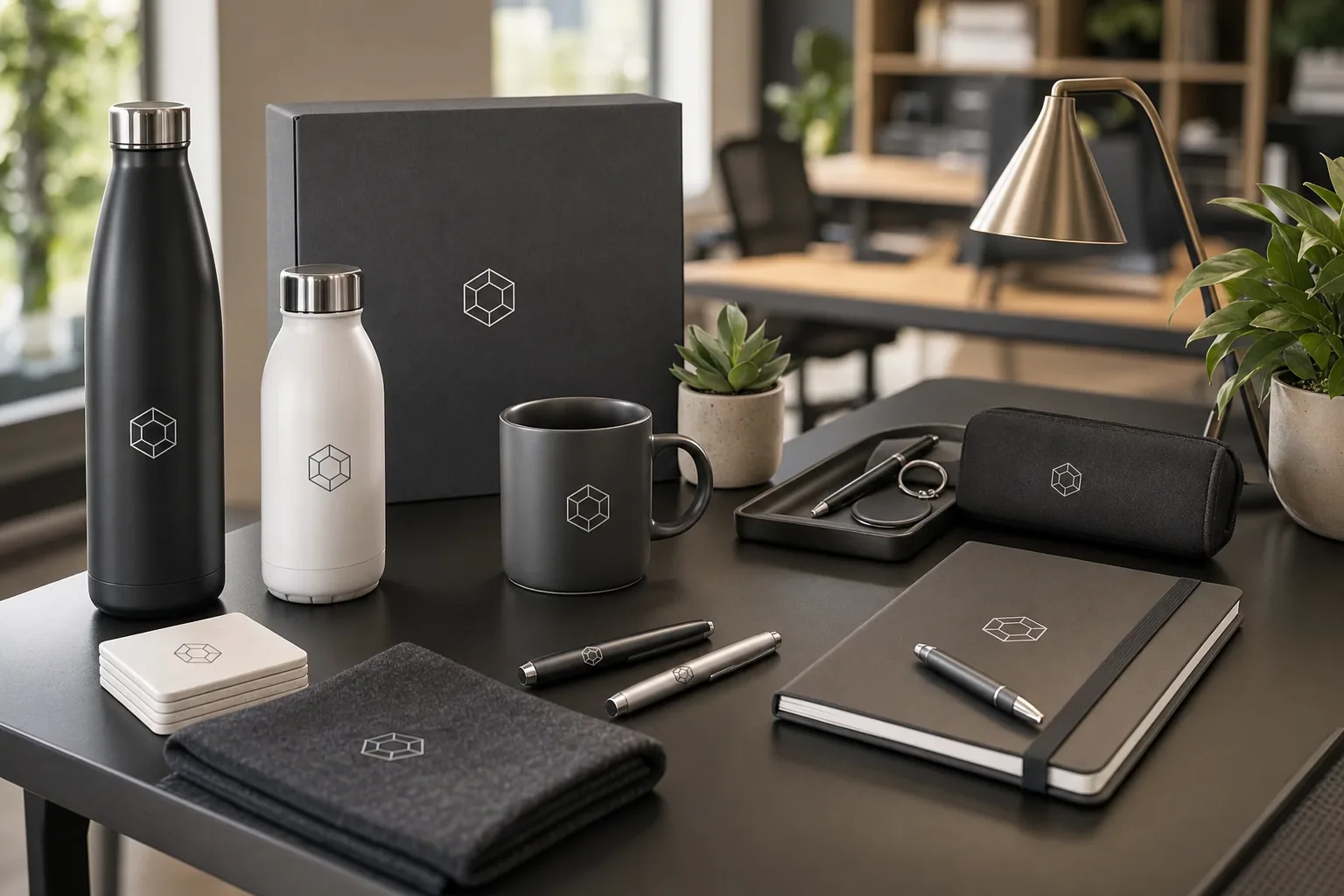
Why a Branded Merchandise Strategy Matters
A branded merchandise strategy isn't about handing out random items at trade shows and hoping something sticks. It's about putting your company name in front of customers repeatedly, in ways that feel useful rather than intrusive. When someone uses a pen with your logo, checks the time on a branded water bottle, or carries a bag with your company name, your brand becomes part of their daily routine.
The goal is simple: stay top-of-mind through everyday products that people actually want to use. Unlike digital ads that viewers scroll past or close, physical branded items sit on desks, in cars, and in bags where they're noticed again and again.
Understand Your Audience First
Before you pick a single promotional item, know who will receive it. Are you targeting corporate clients at a high-end conference? Frontline employees who need practical gear? Event attendees walking through a trade show? Each audience calls for different products.
Marketing managers and business owners often work with several audiences at once. This means your branded merchandise strategy should account for that variety. A luxury leather pen works for executive gifts. A BIC ballpoint works for high-volume event giveaways. The key is matching the product to the recipient and the setting.
Ask yourself these questions:
- Who will use this item?
- Where and when will they use it?
- Will they want to keep it visible, or will it disappear into a drawer?
- What does this product say about my brand?
Choose Products That Get Used
The most successful branded merchandise does one thing above all else: it gets used. Items that sit in a closet or get thrown away are wasted money. Items that people reach for daily are silent salespeople working on your behalf.
Writing instruments are a proven choice for good reason. A custom pen from trusted names like BIC, Parker, Sharpie, Pilot, or uni-ball is recognized, trusted, and used in meetings, at home, at the office, and everywhere in between. When someone picks up your branded pen to jot down a note, your company name is right there in their hand.
Drinkware is equally reliable. A branded mug keeps your logo visible every morning when someone pours their coffee. Water bottles and tumblers work for active employees and outdoor-minded clients. These items earn permanent spots in daily routines because they're genuinely useful.
Bags and totes work differently but just as well. When someone carries a branded bag to the gym, to work, or on a weekend trip, your logo travels with them. The key is choosing a bag style that matches the recipient's lifestyle, not one they'll feel embarrassed to carry.
Align Products with Your Brand Values
Your branded merchandise sends a message about who you are. A premium metal pen says you value quality and professionalism. A budget-friendly plastic pen says you're accessible and practical. Both are valid, but they tell different stories.
Consider your brand positioning. Are you a luxury service? A scrappy startup? A trustworthy corporate partner? Your merchandise choices should reflect that. Someone receiving a high-end promotional item from your company thinks differently about your brand than someone receiving a basic giveaway.
This doesn't mean expensive is always better. A practical, well-made item at any price point outperforms a cheap item that falls apart. Recipients notice quality, and they remember how it makes them feel.
Plan Order Quantities and Timing
Branded merchandise works best when you have enough for multiple touchpoints. Handing out 50 pens at a conference works. Giving 500 to your sales team for the entire year works better. You're building frequency of contact, and that requires volume.
Timing also matters. Seasonal merchandise makes sense for specific campaigns. Holiday gifts for clients. Back-to-school items for employees. Summer drinkware for outdoor events. Planning your branded merchandise strategy around these moments keeps your brand connected to the right season and the right mindset.
Also consider lead time. Quality custom merchandise takes time to produce correctly. The Pen Guy, for example, includes a proof for every order, giving you the chance to approve your branding before production begins. This attention to detail prevents costly mistakes and ensures your logo looks exactly how you want it.
Get the Details Right
Nothing undermines a branded merchandise strategy faster than poor execution. A misspelled company name on a promotional pen makes your brand look careless. A logo that doesn't reproduce well on a tumbler wastes the entire shipment.
This is where the production process matters. Before your branded merchandise goes into production, you should see and approve a proof. This protects you from wasted budget and damaged reputation. It also gives you a chance to adjust placement, sizing, or colors if something doesn't look right.
Choose a promotional products supplier who takes this seriously. One that combines decades of experience with personal attention to detail. One where the owner is still involved in every order, just like Gary Austin has been at The Pen Guy for over 45 years.
Measure What Works
A strong branded merchandise strategy includes a way to track results. Are your branded pens actually getting used, or disappearing into desk drawers? Are clients mentioning your branded items when they reach out? Are your employees proudly carrying bags with your logo?
Tracking doesn't need to be complicated. Simple metrics work: number of items distributed, feedback from recipients, retention in your target audience's daily use. Some companies even ask clients directly if they remember receiving a particular branded item.
Over time, you'll learn which products work best for your audience and which ones fall flat. That data shapes your next branded merchandise strategy and makes it stronger.
Build Long-Term Brand Recognition
Branded merchandise isn't a one-off tactic. It's a consistent investment in visibility. When people see your logo repeatedly on items they actually use, your brand becomes familiar. Familiar brands are trusted brands. Trusted brands get referrals and repeat business.
The companies that do this well, like Microsoft, Apple, State Farm, and the American Red Cross, treat their promotional products as part of their overall brand strategy, not an afterthought. They choose quality items, distribute them thoughtfully, and let those items do the work of keeping the brand in view.
Your branded merchandise strategy doesn't need to be complicated. Start by identifying your key audiences, choosing products they'll actually use, and making sure those products represent your brand well. Then let them work for you, one pen or mug or bag at a time.